


Modality
on-site
Room: 521A
Target Audience
Researchers/Academics and Industry
Requirements for participants
Course participants should bring their own laptop or tablet
Abstract
This course focuses on the integration of socio-technical factors into the design of human-centric, context-aware computer decision support systems. Using a systems thinking paradigm, participants will explore how contextual aspects—such as task time-outs, operational demands, comfort, trust, knowledge sharing, and liability—interact with human-centric factors like age, seniority, and user experience. The aim is to foster agile approaches to Human-Computer Interaction (HCI) services that adapt effectively to diverse and demanding environments.
Attendees will be introduced to methods for modeling, simulating, and evaluating dynamic interactions between humans and computer-based decision support tools. A key emphasis will be placed on identifying “perceptual variables,” which shape user comprehension of operational contexts and influence overall system performance. By understanding how these variables affect decision-making, participants will gain insight into designing systems that enhance situational awareness and reliability.
The course combines theoretical and practical components. An introductory presentation will outline the human-centric factors that impact situational awareness in digital environments. This foundation will be reinforced through modeling and simulation exercises, allowing participants to apply concepts in realistic scenarios. Project-based activities will further deepen understanding by demonstrating how socio-technical modeling approaches can be applied within agile development contexts.
A central theme of the course is iterative design. Simulation will be presented as a powerful decision-support tool, enabling rapid prototyping, hypothesis testing, and impact assessment before full-scale implementation. This iterative process ensures that systems are not only technically sound but also responsive to human needs and contextual challenges.
By the end of the course, participants will have developed the ability to formalize socio-technical factors within simulation frameworks, evaluate human-computer interactions under varying conditions, and apply agile design principles to create effective, human-centric decision support systems.
Benefits for attendees
- Gain a comprehensive understanding of socio-technical factors that influence the right comprehension of computer supporting services.
- Acquire skills in developing and analyzing simulation models for real-world human-computer interaction problems.
- Learn to integrate human-centric and context-aware factors into the system development lifecycle.
- Understand the main human-machine interdependencies to be analyzed to transform adaptable automation systems to adaptive automation services.
Course Content
Aims and Objectives:
- To introduce socio-technical simulation concepts and their relevance to agile, human-centric design.
- To enhance atendees with a methodology for modeling human-machine interdependencies involving human cognitive tasks and contextual demanding time-outs.
- To foster critical thinking about design decisions.
Table of Contents:
- Short Introduction to Socio-Technical Systems and Human-Centric Design
- Fundamentals of FRAM modeling and simulation framework
- Illustrative HCI Applied (attendees participation) Exercise on a Use Case in Air Traffic Management with evaluation metrics
- Questions, Wrap-up and Conclusions
Bio Sketches of Course instructors
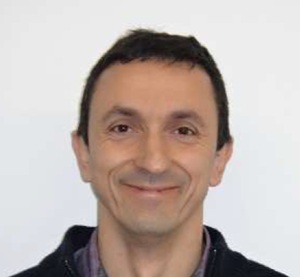
Dr. Miquel Angel Piera (Miquel Angel Piera Eroles - Universitat Autònoma de Barcelona Research Portal)
Graduated with excellence from Universitat Autònoma de Barcelona (UAB) in Computer Engineering (1988), Msc from University of Manchester Institute of Science and Technology in Control Engineering (1991), and PhD from UAB in 1993. He is a full time professor at UAB and co-founder and member of the scientific advisory board a spin-off company Aslogic (www.aslogic.es). Dr Piera is director of LogiSim (research group on Modelling and Simulation of Complex Systems). He is member of the Editorial Board of 3 international journals, former Editor in Chief of IJBRM. Dr. Piera has received several awards and recognitions, among which it is mentioned the “Outstanding Professional Contribution Award” from the internal Society for Computer Simulation (SCS) in USA in 2013 and Institution of Mechanical Engineers Award (UK), Aerospace Division : William Sweet Smith Prize 2015. He has coordinated as Scientific Coordinator more than 10 Spanish national research projects and more than 30 Industrial funded projects, he has also participated in a number of EC funded research. He is author of more than 100 scientific papers, 9 scientific books and has been invited as Key note speaker in more than 10 international conferences.

Jordi Manzano (Jordi Manzano Puigredon – ITS: Intelligent Transportation Systems)
He worked as a Pilot in Air Europa airlines for 35 years where he flew 20,000 hours in the Boeing B737, Boeing B757 and Airbus A330 aircraft. Prior to joining Air Europa, Jordi was a Maintenance Technician and Engineering Instructor in the Spanish Aeronautical National School (ENA) of Salamanca (Spain). In Air Europa he worked as Ground, Simulator, Flight Instructor, Type Rating Examiner and Technical Pilot; he was also involved in Flight Testing and Certification on some FANS and ATN projects.
He instructed new technologies for 15 years in the Eurocontrol Training Institute (IANS) of Luxembourg and the University of Barcelona (UAB).