


Modality
on-line
Target Audience
Researchers/academics, students (graduate/undergraduate in HCI or AI), professionals, and industry practitioners
Abstract
This course explores the intersection of Natural Language Processing (NLP) and Human-Computer Interaction (HCI) to design user-centred interfaces for social learning systems, with an emphasis on usability and enhanced user experience (UX). Social learning environments, such as virtual classrooms, collaborative platforms, and community-driven knowledge-sharing tools, rely on intuitive interactions to foster engagement. Language intelligence, powered by NLP techniques like sentiment analysis, conversational agents, and text summarization, can transform these systems by enabling adaptive, inclusive, and interactive experiences.
Participants will learn to integrate NLP tools into HCI design processes to create interfaces that support collaborative learning. The course covers foundational concepts (e.g., NLP pipelines, UX principles), practical design strategies (e.g., chatbot integration for group discussions), and ethical considerations (e.g., bias mitigation, accessibility). Through case studies—such as designing a chatbot for a virtual study group or a text analytics dashboard for learner feedback—attendees will explore real-world applications. Hands-on exercises will involve prototyping a simple NLP-driven interface using Python libraries (e.g., Hugging Face, spaCy) and UX design tools (e.g., Figma).
The course bridges theory and practice, equipping participants with skills to evaluate and improve social learning interfaces. It addresses challenges like user diversity, scalability, and trust in AI-driven systems. By the end, attendees will be able to design interfaces that leverage language intelligence to enhance collaboration, engagement, and usability in educational and professional contexts. This intermediate course assumes basic familiarity with HCI or AI concepts but is accessible to motivated learners from diverse backgrounds, including academia, industry, and education technology. Join us to discover how language intelligence can revolutionize social learning through thoughtful UX design.
Benefits for attendees
- Practical Skills: Gain hands-on experience in designing NLP-driven interfaces for social learning, using tools like Python and Figma.
- Enhanced UX Knowledge: Learn to apply UX principles to create intuitive, user-centered social learning systems.
- Real-World Applications: Explore case studies (e.g., virtual classrooms, collaborative platforms) to understand NLP-HCI integration.
- Ethical Design Insights: Understand how to address biases, accessibility, and trust in language-based interfaces.
- Interdisciplinary Appeal: Acquire skills relevant to HCI research, ed-tech development, and industry UX design.
- Networking: Engage with peers from academia, industry, and education in a hybrid setting.
Course Content
Aims:
- To equip participants with the knowledge and skills to design NLP-enhanced interfaces for social learning systems.
- To demonstrate the integration of language intelligence with HCI principles for improved usability.
- To address ethical and practical challenges in deploying collaborative learning interfaces.
Objectives:
- Understand core NLP techniques and their application in HCI for social learning.
- Learn to design and prototype interfaces that leverage language intelligence.
- Evaluate the usability of NLP-driven systems through hands-on exercises.
- Explore ethical considerations, including inclusivity and bias mitigation.
Topics Covered:
- Introduction to NLP and HCI for Social Learning
- Principles for Collaborative Interfaces
- NLP Techniques: Sentiment Analysis, Chatbots, and Text Summarization
- Designing Language-Intelligent Interfaces: Tools and Workflows
- Case Studies: Virtual Classrooms, Collaborative Platforms
- Ethical Design: Accessibility, Bias, and Trust
- Evaluating UX in Social Learning Systems
Tentative Table of Contents:
- Module 1: Overview of NLP, HCI, and social learning; key concepts and trends.
- Module 2: Design principles for collaborative interfaces; role of language intelligence.
- Module 3: Hands-on exercise: Prototyping an NLP-driven interface (e.g., chatbot or dashboard).
- Break
- Module 4: Case studies and ethical considerations in NLP-HCI systems.
- Module 5: Usability evaluation techniques; wrap-up and Q&A.
Description of Hands-On Part and/or Exercises
- Exercise 1: Prototyping a Chatbot Interface Participants will use Python (Hugging Face or spaCy) to build a simple chatbot for a social learning scenario (e.g., moderating a virtual study group). They will integrate it with a mock interface designed in Figma, focusing on usability.
- Exercise 2: Sentiment Analysis Dashboard Attendees will create a basic dashboard to analyze learner feedback (e.g., forum posts) using NLP tools, visualizing results to improve UX.
- Group Activity: In small groups, participants will evaluate a sample social learning interface (e.g., a collaborative platform) and propose NLP-based enhancements, presenting findings to the class.
Bio Sketches of Course instructors
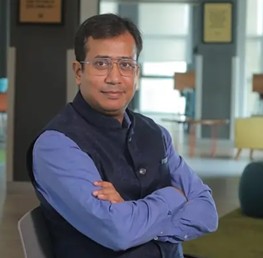
Dr. Atul Mishra (PhD) is an Associate Professor at the School of Engineering & Technology, BML Munjal University with 9 years of experience in the field of Natural Language Processing (NLP), machine learning, and Legal AI. His research focuses on developing intelligent systems that can analyse, process, and understand human language. Dr Mishra's work has been published in several high-impact academic journals, and he has presented her research at various international conferences. His research interests include developing new NLP techniques for improving text classification, information retrieval, and machine translation. He is also interested in developing novel Legal AI applications, such as legal document analysis, summarisation, and knowledge graph construction.
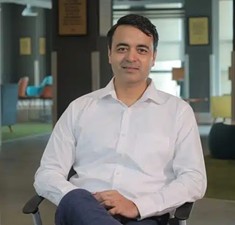
Dr Hirdesh Kumar Pharasi is an Associate Professor at the School of Engineering & Technology, BML Munjal University. He has completed his Ph.D. (2015) from IIT Kharagpur. His research interests are in the areas of Nonlinear Dynamics, Hydrodynamics, Turbulence, Econophysics, Complex Systems, Data Science, and Machine Learning. Hirdesh has earlier worked as a postdoctoral researcher at the Institute de Ciencias Fisicas, UNAM Mexico, and as a research associate at the University of Duisburg and Essen. Prior to that, Hirdesh had worked for a brief period as an Assistant Professor at Doon University, Dehradun, India, during which he was awarded the Governor’s Awards 2017 for best research in the state of Uttarakhand. He has published and presented his research work in many peer-reviewed journals and conferences of repute.

Dr. Yogesh Gupta is a Professor in the School of Engineering and Technology at BML Munjal University, India. He holds a bachelor’s degree in information technology and a Ph.D. in Engineering from Dayalbagh Educational Institute, Agra. A distinguished academician and researcher, Dr. Gupta possesses extensive expertise in information retrieval, machine learning, big data analytics, and soft computing techniques. He has made noteworthy contributions to these domains through numerous publications in reputed international journals and conferences. His current research focuses on applying advanced computational methods to solve complex real-world challenges. Dr. Gupta is a Lifetime Member of the Computer Society of India, underscoring his dedication to advancing computer science and engineering. He has been recognized with several academic and research excellence awards and continues to inspire and mentor students, fostering a culture of innovation and excellence in the field of computing.