


Modality
on-site
Room: 521A
Target Audience
Researchers/academics, students, open source software engineers, project management professionals, industry code developers, other*
*Anyone desiring an introduction to ethical and responsible computing practices in application design and development teams, or those persons who develop open-source software using AI tools or data training AI models.
Requirements for participants
Course participants should bring their own laptop or tablet
Abstract
Advances in high performance computing (HPC) and artificial intelligence (AI) have reignited a need for more responsible and ethical computing in the design and development of applications for pervasive sociotechnical systems operating within the context of existing and evolving societal norms and cultures. Given the likelihood that future technological innovation will have intended, as well as unintended, impacts on societies, we believe the development of ethical mindsets is essential.
However, requirements or guidelines such as the European Union Artificial Intelligence Act (EU AI Act) [1] and NIST AI Risk Management Framework [2] often overwhelm development teams. As such, many lack basic knowledge to adopt responsible computing as a practice. In our own efforts to implement responsible computing, we focus on developing ethical mindsets in our teams. We address complexity by applying a scalable approach to thinking and reflecting about systems as well as internal and external drivers to productivity and process improvement [3]. We use lightweight techniques such as progress tracking cards (PTCs) to introduce ethical mindsets in project teams committed to responsible computing practices that go beyond compliance [4].
This hands-on, interactive course introduces lightweight methods for tracking progress on goals and objectives when adopting ethical mindsets for the implementation of AI [4], reviewing the Euro AI compliance requirements as well as NIST AI Risk Management Frameworks, meeting responsible computing software development goals, and documenting progress toward the application of ethical compliance. Having mental frameworks to think about how AI advances impact ethical considerations will help individuals, teams, and organizations consider cultural tradespaces as models and technologies evolve.
Course participants will engage in small and large-group discussions, addressing selected case studies, scenarios, or situations. Through facilitated practice and collaboration, participants develop initial skills to address their unique needs while simultaneously offering a broader perspective through exploration of diverse examples.
Benefits for attendees
Benefits include:
- Develop a mental framework for applying an ethical mindset about AI
- Explore the application of a framework for implementing EU AI Act requirements for doing business with AI in the EU
- Apply an ethical mindset to the NIST AI Risk Management Framework
- Understand how to use lightweight methods such as Progress Tracking Cards (PTC) and how to apply them for developing a sustainable process as models and systems develop and evolve over time.
- Create completed Progress Tracking Cards (PTC) that can be shared and integrated into GitHub, Jira, and PPTs for attendees’ own scenario.
Course Content
Objective: The objective of this course is to apply a scalable approach to thinking and reflecting about systems by using lightweight techniques such as progress tracking cards (PTCs) to introduce ethical mindsets in project teams committed to responsible computing practices that go beyond compliance [4]. Participants are encouraged to bring their own scenarios or work through the examples provided by the facilitators from research, practice, and industry. A foundational idea throughout the course will be understanding the ethical concerns and implications of both the act and things not directly regulated by the act to help people behave more in the spirit of the rules in addition to the strict letter of the rules.
The course will meet the following learning objectives:
- Hone ethical mindsets in design or software teams toward shaping the future of responsible computing
- Understand ethical challenges in software development: discover how to integrate social and ethical considerations into your development processes
- Define unconscious bias: learn how personal values can impact your approach to and ethics
- Understand the application of diverse AI risk assessment frameworks, EU AI Act standards, and guidelines as a minimum standard for ethical AI use
- Create Progress Tracking Cards (PTC): Implement a practical tool to track ethical considerations throughout your project
- Apply approach to real-world applications: explore how honing an ethical mindset can benefit your teams and sponsors
- Empower teams and individuals: gain insights into building a culture of ethical awareness and accountability
Table of Contents
- Introduction to Ethical Mindsets in Teams and Organizations
- Role of Mindset
- Ethics Foundation
- NIST AI Risk Management Framework
- EU AI Act Overview
- Use Case and Discussion
- Progress Tracking Cards (PTC) Overview
- Use of PTCs in Teams and Across Organizations
- Evolving mindset through the application of PTCs
- Use Case: Application of PTCs to EU AI Act compliance
- Integrating PTCs in GitHub, Jira, and Project Management Tools
- Adopting Ethical Mindsets in Teams and Organizations by applying Progress Tracking Cards (PTCs) to Projects
- Hands-on Development of PTCs
- Small groups: Attendees develop initial progress tracking cards for their scenario or examples provided by facilitators
- Identifying Impact Metrics Based on PTCs
- Small groups: Discussion of developed examples, how the attendees applied the lightweight PTC approach to their scenarios, challenges/benefits to the approach
- Communicating Team and Organization Ethical Mindsets with Others
- Large groups: discussion of ideas for improvement and adoption in one’s team or organization
- Hands-on Development of PTCs
- Course Conclusion
- Review Course Learning Objectives
- Questions and Answers
- Course Evaluation
Relevant Course links:
SC23: The Ethics of Supercomputing. HPCWire, November 29, 2023.
Shaping the Ethical Future of HPC and AI. (April 8, 2025). SC24 (The International Conference for High Performance Computing, Networking, Storage, and Analysis).
References:
[1] https://artificialintelligenceact.eu/
[2] NIST (2023). Artificial Intelligence Risk Management Framework (AI RMF 1.0). https://doi.org/10.6028/NIST.AI.100-1
[3] Elaine Raybourn, Elsa Gonsiorowski, Reed Milewicz, David Rogers, Ben Sims, Greg Watson, James Willenbring, (2021). Hands-on Tutorial with PSIP Progress Tracking Cards: A Lightweight Method for Improving Software Practices https://www.osti.gov/servlets/purl/1863524
[4] Elaine M. Raybourn and Killian Muollo. 2023. Guidelines for Practicing Responsible Innovation in HPC: A Sociotechnical Approach. In Distributed, Ambient and Pervasive Interactions: 11th International Conference, DAPI 2023, Held as Part of the 25th HCI International Conference, HCII 2023, Copenhagen, Denmark, July 23–28, 2023, Proceedings, Part I. Springer-Verlag, Berlin, Heidelberg, 105–118. https://doi.org/10.1007/978-3-031-34668-2_8 and https://www.osti.gov/servlets/purl/2431844
Bio Sketches of Course instructors

Dr. Elaine M. Raybourn is a social scientist supporting DOE next generation software technologies stewardship as the Steering Committee Secretary for the Consortium for the Advancement of Scientific Software. Previously at Sandia National Laboratories, she contributed to the Department of Energy Office of Science Exascale Computing Project (ECP) and led research for various government agencies. As a European Research Consortium for Informatics and Mathematics (ERCIM) Fellow, she worked with software development teams at Fraunhofer FIT in Germany, the French National Institute for Computer Science (INRIA), and BT Global Research and Development in the UK. Her research focuses on complex socio-technical systems of scientific software teams of teams, collaborative immersive virtual environments, transmedia learning, high performance computing AI/ML ethics, and the diffusion of innovations to incentivize program modernization and cultural change. She holds a Ph.D. in Intercultural Communication with an emphasis in Human Computer Interaction from the University of New Mexico, a Graduate Certificate in Modeling & Simulation of Behavioral Cybersecurity from the University of Central Florida, and a certificate in Data Ethics from eCornell.
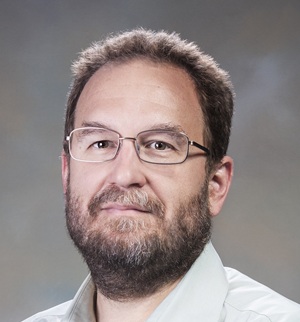
Dr. Jay Lofstead is a Principal Member of Technical Staff at Sandia National Laboratories. His work focuses on infrastructure to support all varieties of simulation, scientific, and engineering workflows with a strong emphasis on IO, middleware, storage, transactions, operating system features to support workflows, containers, software engineering and reproducibility. He also works extensively to support various student mentoring and diversity programs at several venues each year including outreach to both high school and college students. Jay graduated with a BS, MS, and PhD in Computer Science from Georgia Institute of Technology and was a recipient of a 2013 R&D 100 award for his work on the ADIOS IO library.
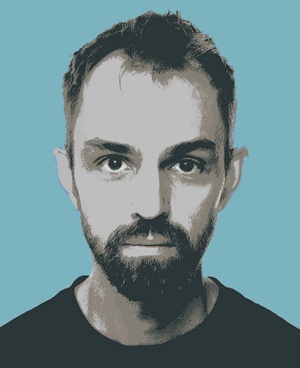
Jakob Luettgau is a researcher at the French Institute for Research in Computer Science and Automation (INRIA). He earned his PhD in Computer Science in 2021 from the University of Hamburg (Germany) after graduating with his BSc and MSc from the same University in 2014 and 2016. From 2016 to 2019 he worked with the Centre of Excellence in Simulation of Weather and Climate in Europe (ESiWACE) at the German Climate Computing Center (DKRZ). He visited Argonne National Laboratory (ANL) as a Short-Term Scholar in 2018 and 2019 while holding a research position at DKRZ. In 2020 he became an AI Consultant for Helmholtz AI/DKRZ advising researchers in the earth sciences throughout Germany. In 2021 he joined the University of Tennessee as a post-doctoral researcher, and in September 2022 he became a research assistant professor. In October 2023 he joined Inria as a researcher in the KerData team where he is working on sustainable storage and computing architectures for the computing continuum.